Infertility & Fertility Care
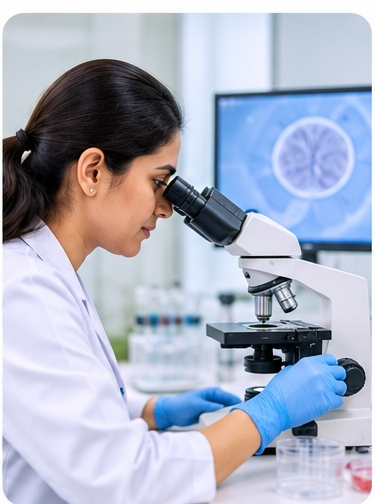
A step-by-step fertility work-up for couples, with follicular study, ovulation induction and IUI.
Learn more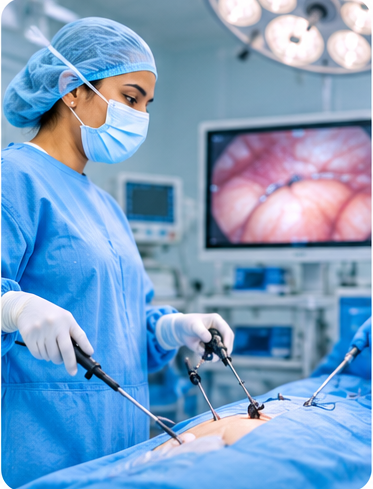
In laparoscopic surgery, a thin camera and fine instruments are passed through a few small cuts in the abdomen. The surgeon operates while watching a magnified view on a screen. Compared with open surgery, this usually means less pain, a shorter hospital stay and smaller scars.
Dr. Swetha holds a Fellowship and a Diploma in Minimal Access Surgery from World Laparoscopy Hospital, Gurugram, and is a member of the World Association of Laparoscopic Surgeons. Not every condition is suitable for keyhole surgery, so she will tell you honestly which approach is best in your case.
Removal of the uterus through small cuts for conditions such as large fibroids, adenomyosis or heavy bleeding that has not responded to other treatment.
Removal of fibroids while keeping the uterus, for women who wish to preserve it.
Removal of an ovarian cyst while saving as much healthy ovarian tissue as possible.
Removal of endometriotic (chocolate) cysts and treatment of endometriosis to relieve pain.
A short keyhole procedure for permanent contraception.
Removal of the uterus through the vagina, with no cut on the abdomen, often used for prolapse.
A thin telescope passed through the cervix to look inside the womb and treat polyps, small fibroids or a septum.
Here is how your care usually goes, step by step.
Your symptoms, scans and options are reviewed, including treatments that do not involve surgery.
Blood tests and an anaesthetic assessment to make sure you are fit for surgery.
The operation is performed under anaesthesia through small cuts.
Most women are walking soon after surgery. A follow-up visit checks healing and discusses any reports.
A few small openings instead of one large incision.
Most women need less pain relief after surgery.
Many women go home sooner than after open surgery.
Daily activities can usually be resumed earlier.
It is a well-established way of operating. Like all surgery it carries some risks, which are explained to you before you give consent.
It varies with the operation and your health. Many keyhole procedures need only a short stay.
There will be a few small scars, each usually less than a centimetre or so, which fade with time.
No. Open surgery is sometimes safer, for example with very large fibroids or dense scarring. The best approach for you is discussed beforehand.
A step-by-step fertility work-up for couples, with follicular study, ovulation induction and IUI.
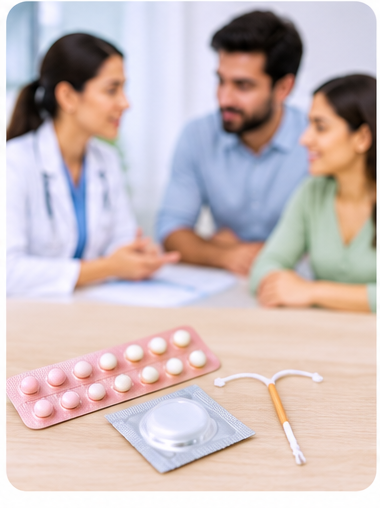
Learn morePrivate, practical advice on spacing or completing your family — IUCD, tubectomy and other options.
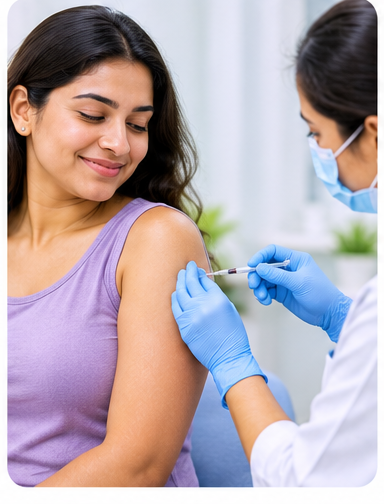
Learn morePap smear, colposcopy and HPV vaccination to prevent cervical cancer or find changes early.
Learn more